Reverse BMI Calculator
Find the exact weight you need to reach a target BMI. Enter your height and desired BMI to see your goal weight, plus a complete weight range table for all BMI categories.
Enter Details
Healthy BMI range: 18.5 – 24.9. Default is 22 (middle of normal range).
Unlock Pro Features
Get unlimited calculations, advanced charts, and downloadable PDF reports.
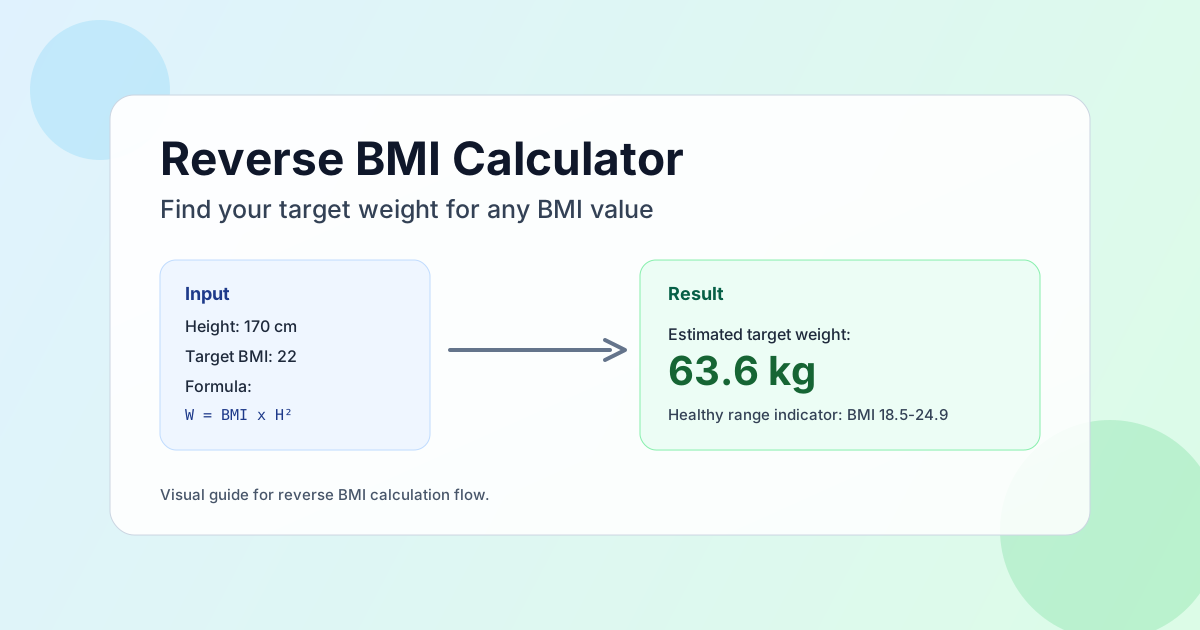
A Reverse BMI Calculator estimates the body weight required to reach a specific Body Mass Index (BMI) based on your height. Instead of calculating BMI from your current weight, this tool works in the opposite direction.
You simply enter your height and target BMI, and the calculator estimates the weight you should have to reach that BMI.
People commonly use a reverse BMI calculator to set healthy weight goals, estimate weight for BMI 22 or BMI 25, plan fitness targets, and stay within the recommended BMI range from the BMI Calculator.
Health organizations such as the World Health Organization (WHO) and the Centers for Disease Control and Prevention (CDC) use BMI as a general screening tool to categorize weight status in adults.
A Reverse BMI Calculator calculates the body weight required to achieve a target BMI based on a person's height. Normally, BMI is calculated using height and weight to classify weight status.
If you want a direct BMI check first, use the BMI Calculator and then return here for target-weight planning.
A reverse BMI calculator answers a different question: If I want my BMI to be 22, what weight should I have based on my height?
Example
Height: 170 cm
Target BMI: 22
Estimated weight: about 63 kg
The formula is the BMI equation rearranged to solve for weight:
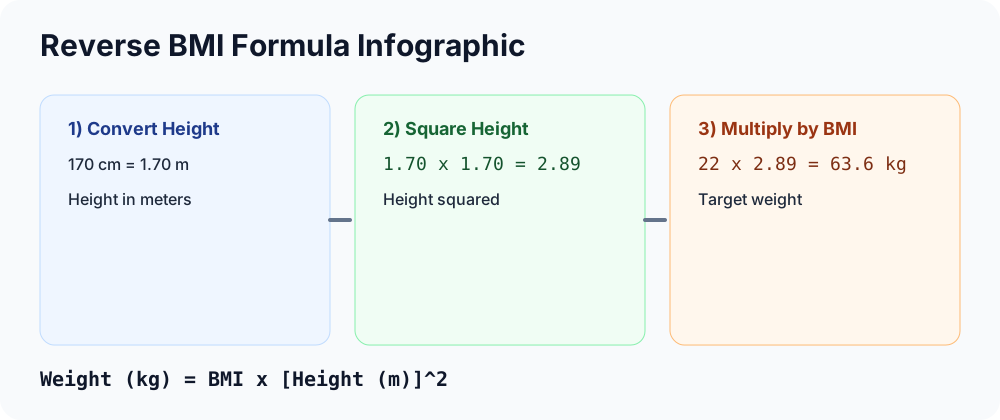
Weight (kg) = BMI x [Height (m)]^2
Step 1
Convert height to meters
Step 2
Square height
Step 3
Multiply by target BMI
Example calculation: Height 1.70 m, target BMI 22, estimated weight 63.6 kg.
Step 1: Enter your height in centimeters or feet.
Step 2: Enter your current weight.
Step 3: Enter your target BMI (healthy range is usually 18.5 to 24.9).
Step 4: Click calculate target weight button.
Step 5: Review your estimated target weight and category ranges, then validate broader nutrition needs with the Calorie Calculator.
| Height | Target BMI | Estimated Weight |
|---|---|---|
| 170 cm | 22 | 63.6 kg |
| 175 cm | 24 | 73.5 kg |
| 180 cm | 25 | 81.0 kg |
| 165 cm | 21 | 57.2 kg |
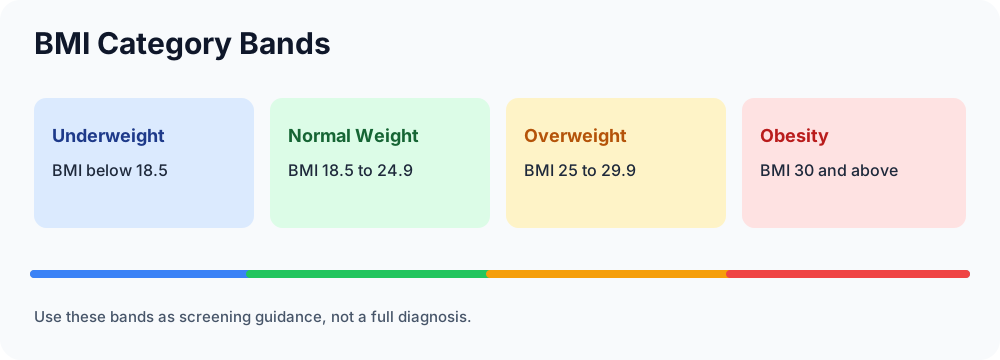
| BMI Range | Category |
|---|---|
| Below 18.5 | Underweight |
| 18.5 - 24.9 | Normal weight |
| 25 - 29.9 | Overweight |
| 30+ | Obesity |
Category infographic: Underweight, Normal, Overweight, Obesity.
| Height | BMI 18.5 | BMI 22 | BMI 24.9 |
|---|---|---|---|
| 160 cm | 47 kg | 56 kg | 64 kg |
| 170 cm | 53 kg | 63 kg | 72 kg |
| 175 cm | 57 kg | 67 kg | 76 kg |
| 180 cm | 60 kg | 71 kg | 81 kg |
Set realistic targets
Translate BMI goals into a clear target body weight.
Plan fitness phases
Use estimated targets for weight-loss or weight-gain planning.
Instant calculation
No manual formula work; get results immediately.
BMI is a screening tool, not a complete diagnostic measure. It does not directly measure body fat percentage, muscle mass, bone density, or fat distribution.
For example, athletes with high muscle mass can show higher BMI while still being metabolically healthy.
Use BMI with other indicators such as waist circumference, body-fat estimates, activity levels, and clinical guidance.
For body-composition context, combine this with the Body Fat Calculator. Evidence references: NIH BMI guidance and Mayo Clinic BMI overview.
Disclaimer: This calculator provides estimates for informational purposes only. Results may vary based on individual factors.