Ideal Body Weight Calculator
Find your healthy weight range based on height, gender, and body frame.
Enter Details
Unlock Pro Features
Get unlimited calculations, advanced charts, and downloadable PDF reports.
When you use an Ideal Weight Calculator, it computes an estimate of your ideal body weight (IBW) based on standard ranges. These calculations usually factor in your height, gender, and age using a specific formula. From working with health data, it's helpful to look at popular formulas—like Devine or Robinson—to see how results can vary. Looking at side-by-side comparisons of these numbers helps you realize that "ideal" isn't a single point but a starting point for anyone looking to lose weight.
Clinical Use: Doctors use these formulas to estimate dosages for certain drugs because the metabolism of some medications is more closely tied to lean mass than total body weight.
The perception of ideal body weight is often heavily influenced by what's promoted in the media. Between social media, TV, movies, and magazines, there is an intense focus on visual appeal. However, in a clinical setting, IBW has a practical medical use.
In the world of sports, coaches and organizations often classify individuals by weight, but we have to remember that no equation is a perfect measurement. These numbers often fail to distinguish between body fat and muscle. Many athletes who are incredibly fit and healthy might be labeled as overweight by a generalized formula. Because it is an imperfect measure, it shouldn't be the final word on your health.
Key Principles for True Wellness:
- Engage in regular exercise to maintain muscle
- Prioritize unprocessed foods over quick snacks
- Don't underestimate the power of consistent sleep
Understanding a target weight range is about more than just aesthetics; it serves as a vital tool for health monitoring. By identifying a target, individuals can establish clear benchmarks for their wellness journey, making it easier to spot significant fluctuations that might indicate underlying issues.
Health Monitoring
Track long-term weight management based on data rather than guesswork, providing a baseline for medical professionals.
Realistic Fitness Goals
Focus on targets that align with your unique body structure, making the journey sustainable and motivating.
Medical Safety
Accurate weight is necessary for determining correct medication dosages, as many treatments are weight-dependent.
Personal Health Profile
Understand your baseline and identify significant fluctuations that might indicate underlying health issues.
The B. J. Devine Formula (The Clinical Standard)
Published by B. J. Devine in 1974, this is perhaps the most widely used version in medical settings today for medicinal dosage. It's the "gold standard" when pharmacists need to calculate how a body will clear specific medications.
Men: 48.0 kg + 2.7 kg × (height in inches − 60)
Women: 45.5 kg + 2.2 kg × (height in inches − 60)
Distinguishing between Ideal Weight and BMI is essential for a clear understanding of health metrics. While BMI provides a mathematical ratio based on height and weight, it often serves as a broad screening tool rather than a precise diagnostic. On the other hand, finding an Ideal Weight involves looking at what is optimal for a specific individual's frame and health history.
To get a better picture of health, it is helpful to look at body composition alongside these numbers. Relying on a height-to-weight ratio alone can be misleading because it ignores where weight is distributed. Experts often suggest using these metrics as a starting point while focusing on more detailed health indicators like waist circumference or metabolic markers.
| Feature | Ideal Body Weight (IBW) | Body Mass Index (BMI) |
|---|---|---|
| Primary Goal | To identify the optimal weight for a person's height and frame. | To categorize weight status (underweight, healthy, overweight, obese). |
| Calculation Basis | Typically uses formulas based on height, gender, and sometimes frame size. | A simple mathematical formula: weight / height² |
| Focus | Targets a specific weight goal or narrow range. | Measures the ratio of weight relative to height. |
| Muscle vs. Fat | Often fails to account for muscle mass, similar to BMI. | Does not distinguish between muscle mass and body fat. |
| Clinical Use | Frequently used for determining medical dosage and nutritional needs. | Used as a general screening tool for population health risks. |
| Result Type | A specific number or target weight. | A numerical score (e.g., 22.5) placed on a scale. |
Key Takeaway: By understanding that these are estimated ranges, individuals can shift their focus toward functional health rather than just hitting a specific number on a scale.
When we talk about an ideal weight, it is rarely about a single number on a scale. Various biological and environmental factors act as a determinant for your IBW.
Body Composition (Muscle vs. Fat)
The ratio of lean muscle mass to body fat is one of the most critical aspects of health. Two people can have the same BMI, yet one might be incredibly fit while the other carries excess adipose tissue. Males typically have a higher percentage of muscle mass and higher bone density, whereas females naturally carry more body fat for reproductive health.
Action: Check out our Macro Calculator to optimize your protein, carbs, and fat intake.
Bone Density and Frame Size
Your body frame size plays a massive role in where you fall within weight ranges. Someone who is large-boned will naturally weigh more than someone who is small-boned or medium-boned, even at the same height.
- •Woman at 5'2": Wrist under 5.5" = small-boned; over 5.75" = large-boned
- •Woman at 5'5": 6" to 6.25" measurement = medium frame
- •Men: 6.5" to 7.5" typically indicates a medium frame
Note:A larger frame can account for a 10-20% difference in weight, which is why a one-size-fits-all approach doesn't work.
Age and Hormonal Health
Age is a major factor in weight shifts. Growth spikes typically peak around 14-15 for girls and 16-17 for boys. As we move into aging (especially past age 70), we tend to lose lean muscle mass, which can slow the metabolism. Beyond just years, lifestyle factors like diet, exercise, stress, and sleep all regulate the hormones that dictate weight retention.
Ethnic Background and Body Proportions
Your ethnic background influences how your body is proportioned and your health risk profile. Some populations are predisposed to be taller or have different limb-to-torso ratios, which affects how weight is distributed. Understanding your heritage helps in setting realistic goals that go beyond a generalized formula.
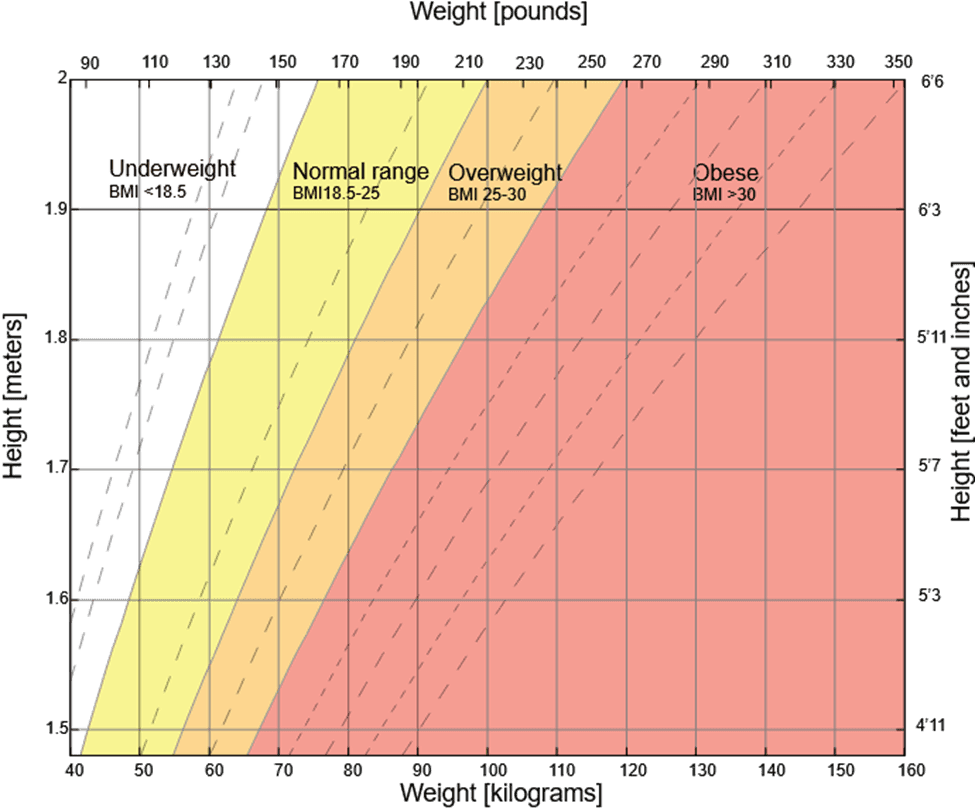
Standardized charts offer a structured way to visualize where a person stands in relation to population averages. While no single chart can perfectly capture the complexity of human biology, these data points help in health tracking and identifying when a person might be moving away from their normal weight range.
Ideal Weight for Males
For adults who identify as male, charts typically lean on the Devine formula or similar methods that prioritize height as the primary variable. Men often have a higher bone density and different body composition than women, so their Ideal Weight targets are usually set higher even at the same stature.
Ideal Weight for Females
When determining the ideal range for females, formulas often adjust for a typically higher percentage of essential body fat. It is important to note that a woman's personal health profile can shift significantly during different life stages, making it important to consult appropriate resources for specific conditions.
Standard digital tools provide a quick snapshot of health, but relying on them reveals several critical limitations. Most traditional formulas are built on narrow datasets that prioritize height and gender while ignoring the complexities of individual physiology.
Primary Issues:
- ⚠Cannot differentiate between muscle mass and body fat ratios
- ⚠Fails to account for activity levels, which play a massive role in weight distribution
- ⚠Often provides skewed results for individuals with physical handicaps or extreme weights
- ⚠Static calculations become obsolete for anyone who is pregnant
Without analyzing a person's specific body composition, the resulting number should only be viewed as a general guideline. Much like BMI, which often places fit individuals outside of a normal weight range, these tools lack the nuance required to evaluate a person's diet or overall metabolic health.
When to Consult a Professional:
While digital tools offer a general guideline, it is essential to consult a specialist if you have physical handicaps that affect traditional measurements or if your activity levels are significantly higher or lower than average. A professional can provide a deeper analysis of muscle mass and overall health that a simple height-based formula cannot.
Once a target is identified using an IBW calculator, the next step is moving from data to action. These results provide a necessary starting point, but the real value lies in how they are integrated into a broader health tracking strategy.
Setting Realistic Weight Loss Targets
Effective weight management depends on establishing realistic targets that prioritize long-term health over quick fixes.
- ✓Avoid aiming for the extreme ends of the weight spectrum too quickly
- ✓Focus on a diet that supports gradual progress
- ✓Use the normal weight range as a broad destination, adjusting based on how your body feels
Want to optimize your diet? Try our Cutting Macro Calculator for tailored nutrition plans.
Using IBW for Nutritional Planning
In clinical and fitness settings, knowing an estimated range is vital for calculating nutritional needs. Specialists often use Ideal Weight to determine protein requirements or even medical dosage, as these figures are often more accurate than total body weight for those with high body fat ratios.
When to Consult a Professional
While digital tools offer a general guideline, they have clear limitations. Expert guidance ensures that fitness goals are met safely and that any underlying health issues are addressed alongside weight changes.
Disclaimer: This calculator provides estimates for informational purposes only. Results may vary based on individual factors.